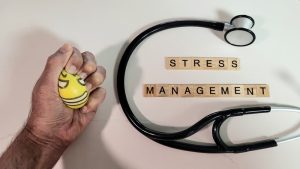

When anxiety starts building, the mind can feel like a browser with too many tabs open. One worry leads to another, yesterday’s mistake suddenly feels important again, and tomorrow’s possibilities begin competing for attention. Sometimes there is no obvious external problem to solve; there is simply a constant stream of thoughts that refuses to quiet down. This is one reason writing has remained such a popular self-management practice.
Daily journaling for stress is often presented as a simple way to put those thoughts somewhere outside your head. But does science actually support the idea? The answer is more nuanced than a simple yes or no. Research on expressive writing suggests that structured writing about stressful or emotional experiences can produce small but measurable improvements in anxiety, stress, and related symptoms in some people. A 2023 meta-analysis of 31 experimental studies involving 4,012 participants found a small but statistically significant overall reduction in depression, anxiety, and stress symptoms, with some effects becoming more apparent at follow-up rather than immediately after writing.
At the same time, researchers do not use “journaling” and “expressive writing” as perfect synonyms. A daily diary about what you ate, what meetings you attended, or what happened during the day is different from a structured exercise in which you explore emotions, stressful events, interpretations, and meaning. That distinction matters when evaluating the evidence.
The practical takeaway is encouraging but realistic. Journaling can be a low-cost, private tool that may help organize thoughts, increase emotional awareness, and create psychological distance from worries. However, it should be viewed as a complementary stress-management strategy rather than a guaranteed treatment for an anxiety disorder. Understanding how to use it may matter just as much as deciding whether to use it.
What Is the Difference Between Stress and Anxiety?
Before looking at journaling, it helps to separate stress from anxiety. The two experiences overlap, but they are not identical. According to the American Psychological Association, stress is generally connected to an external trigger, such as a deadline, conflict, financial pressure, or major life change. Anxiety involves persistent or excessive worry that can continue even when an immediate stressor is absent.
That distinction explains why someone might reach for a journal after a difficult day and feel better after putting the experience into words. The stressor may be identifiable: an argument, difficult presentation, overloaded schedule, or uncertain decision. Writing can create a structured opportunity to process what happened.
Anxiety can be more complicated. A person may worry about several possible future problems without being able to identify one concrete issue that needs solving. In that situation, journaling may help identify patterns, but repeatedly writing the same catastrophic predictions can potentially become another form of rumination.
That is why the goal should not simply be to write more. The goal is to use writing in a way that helps create understanding, perspective, emotional processing, or a practical next step.
Why Might Writing Help With Stress?
One possible explanation is that writing gives unstructured thoughts a structure. Anxiety can make thoughts feel fragmented: “What if this happens? What if I said the wrong thing? What if everything goes badly?” Putting those thoughts into sentences requires a person to slow down and organize them.
Research discussed by the APA has suggested that expressive writing may reduce intrusive or avoidant thinking and free cognitive resources that can be used for other activities. This does not mean writing switches off the stress response like a button, but it provides one possible explanation for why translating an experience into language can sometimes change how it is mentally represented.
Writing can also create psychological distance. A worry that feels enormous when it remains inside your head may look different when you see it on a page. You may notice that two separate fears have been blending together or that one assumption has been treated as a fact.
Another possible mechanism involves meaning-making. Earlier research summarized by the APA suggests that simply reliving an upsetting experience is not necessarily the important ingredient; making sense of what happened and developing meaning may be more useful.
Does Daily Journaling for Stress Need to Happen Every Day?
Surprisingly, the research does not establish that everyone needs to journal every day. In fact, the leading expressive-writing researcher James Pennebaker has explicitly discussed writing as something he uses when difficult circumstances arise rather than as an obligatory daily routine.
This matters because turning journaling into another daily performance requirement could create unnecessary pressure. Someone who already feels overwhelmed might begin thinking, “I failed because I skipped my journal today.” That is hardly helpful stress management.
The research instead suggests that writing interventions can involve several sessions separated by intervals. The 2023 meta-analysis found stronger effects in studies using short intervals of one to three days between sessions compared with longer intervals, although the overall evidence does not translate into a universal prescription for daily journaling.
For everyday use, consistency may be more useful than perfection. A person might journal briefly several times a week, write when a particular stressor becomes difficult, or use a short reflection at the end of demanding days.
The best routine is one that supports reflection without becoming another source of guilt.
How Daily Journaling for Stress Can Help Organize Worry
Imagine someone lying awake because tomorrow’s work presentation is making them anxious. Their thoughts jump between forgetting information, disappointing colleagues, being judged, and imagining what might happen afterward.
Writing those thoughts down can make the worry more concrete.
Instead of allowing every possibility to circulate simultaneously, the person can identify what is actually known, what is uncertain, and what can be influenced. The journal becomes a place to separate facts from predictions.
For example, “I have a presentation at 10 a.m.” is a fact. “Everyone will think I am incompetent if I make a mistake” is a prediction. “I can review my three most important points tonight” is an actionable response.
This resembles a broader psychological principle used in cognitive behavioral approaches: examining the relationship between thoughts, emotions, and behaviors. The APA identifies cognitive behavioral therapy as one of the most research-supported approaches for managing stress and anxiety and describes reframing thoughts as an important component.
Journaling is not the same thing as CBT, but a structured journal can sometimes provide space for similar reflection.
The Difference Between Processing and Rumination
This may be the most important caution when using a journal for anxiety. Writing can help you process a difficult experience, but it can also become a place where you repeatedly rehearse the same worry.
Suppose someone writes, “I am worried my friend is angry with me,” and spends twenty minutes generating increasingly elaborate explanations for why the friendship might be ending. If they finish feeling even more convinced of the worst-case scenario, the writing session may have reinforced the worry rather than created perspective.
Healthy reflection tends to move toward understanding, perspective, acceptance, or an appropriate action. Rumination tends to circle the same unresolved material without producing new information.
The APA’s discussion of expressive writing emphasizes that simply venting emotions is not necessarily enough. Research has suggested that meaning-making and understanding may be important components of beneficial writing.
This is why a useful journal entry might eventually ask, “What do I know?” “What am I assuming?” and “What is one thing I can control?” rather than endlessly adding new versions of the same fear.
A Simple Evidence-Informed Journaling Method
There is no single scientifically mandated journaling format, but a structured approach can make writing more purposeful. Start by choosing a quiet period when you are unlikely to be interrupted. Ten to twenty minutes can be enough for a focused session; longer is not automatically better.
Begin with the situation that is creating stress. Write honestly about what happened, how you interpreted it, and what emotions appeared. Do not worry about grammar or making the writing sound intelligent. The journal is for processing, not publication.
Then move from description toward reflection. Ask yourself what the situation means to you, what part is within your control, what remains uncertain, and whether your first interpretation is the only possible interpretation.
Finish by identifying a realistic next step or something you can allow yourself to leave unresolved for now. This final transition can help prevent the session from ending with an open loop of anxiety.
A simple structure could look like this:
What happened?
What am I feeling?
What am I worried might happen?
What evidence do I actually have?
What is within my control?
What is one useful next step?
What Time of Day Is Best for Journaling?
There is no strong scientific rule saying morning journaling is better than evening journaling. The most useful time depends on what you want the practice to accomplish.
Morning writing can help someone identify priorities and notice worries before the day becomes busy. Evening journaling may provide an opportunity to review stressful events and separate unfinished tasks from thoughts that can wait until tomorrow.
For people whose minds become more active at bedtime, however, an emotionally intense writing session immediately before sleep may not always feel calming. A shorter reflection focused on tomorrow’s priorities or unresolved practical tasks may be more appropriate.
The important point is to match the method to the purpose. Journaling is a tool, not a ritual that must be performed at one particular hour.
Digital Journaling vs. Writing by Hand
There is no need to assume that a paper notebook is automatically more therapeutic than a digital journal. What matters most may be the quality and purpose of the reflection rather than the aesthetic of the notebook.
Typing can be faster, searchable, and convenient. Handwriting can feel slower and more deliberate. Some people enjoy the physical separation created by closing a notebook after writing, while others prefer having their journal available on a phone.
Privacy should be considered with digital journaling. If the writing contains highly personal information, use appropriate device security and understand how an app stores or synchronizes data.
The best format is ultimately the one you will use comfortably and honestly without creating additional practical stress.
A Realistic Example
Consider Maya, a fictional office worker who frequently worries about making mistakes. After a difficult meeting, she spends the evening replaying one sentence she said.
Instead of continuing to mentally rehearse the conversation, she opens her journal. She writes what happened, what she thinks her manager meant, what evidence supports that interpretation, and what evidence does not.
She realizes that her manager asked a follow-up question but did not criticize her work. She then writes one practical step: review the relevant figures before the next meeting.
The anxiety does not necessarily disappear. That is not the standard by which the exercise should be judged. But the worry has changed from an undefined threat into a specific situation with an actionable response.
That is a realistic way to understand what journaling can do. It may not eliminate anxiety, but it can sometimes make a complicated internal experience easier to observe and work with.
Final Verdict: Does Journaling Work for Stress and Anxiety?
The scientific evidence supports a cautiously positive answer. Expressive writing has demonstrated small beneficial effects on anxiety, stress, and related symptoms across research, including a 2023 meta-analysis of 31 experimental studies. However, effects can be modest and delayed, and they vary between people and writing approaches.
The evidence does not establish that everyone needs to journal every day. In fact, researchers have used different schedules and formats, and recent research on single-session writing for test anxiety found no significant anxiety benefit.
So daily journaling for stress is best understood as one potentially useful tool rather than a guaranteed solution. Its value may come from slowing down anxious thinking, putting emotions into words, identifying patterns, separating facts from predictions, and finding meaning or practical next steps.
The most effective approach is usually gentle and realistic. Write honestly, avoid turning the practice into another performance requirement, and notice whether writing leaves you feeling clearer or more stuck.
If journaling helps you understand your stress and respond to it more thoughtfully, it can earn a place in your self-care routine. If it repeatedly intensifies distress or your anxiety is interfering with daily life, it is a sign that additional support may be more useful.
In other words, the science does not promise that a notebook can cure anxiety. It does suggest that, for some people and in the right form, putting experience into words can be a meaningful part of managing stress.
Frequently Asked Questions
Is daily journaling scientifically proven to reduce anxiety?
Research supports expressive writing as a potentially helpful strategy for reducing anxiety, stress, and related symptoms, but the effects are generally small and vary between people. A 2023 meta-analysis found statistically significant overall benefits, while newer research shows that single-session writing does not reliably reduce every form of anxiety.
How long should I journal for stress?
Many expressive-writing studies have used focused sessions lasting roughly 15 to 30 minutes, but there is no universally required duration for everyday journaling. A shorter session can still be useful if it helps organize thoughts and identify what you can control. The goal is meaningful reflection, not writing a certain number of pages.
Can journaling make anxiety worse?
It can happen, particularly if writing repeatedly reinforces rumination or causes someone to relive distressing experiences without gaining perspective. Research has noted that writing about trauma can initially increase emotional arousal. If journaling consistently makes you feel overwhelmed or less functional, stop and consider discussing the experience with a qualified mental-health professional.
Is morning or nighttime journaling better for stress?
Neither time has been established as universally superior. Morning journaling can help clarify priorities and worries before the day begins, while evening writing may help process the day’s events. If emotionally intense writing makes you more alert at bedtime, a shorter practical reflection may be preferable to deep emotional processing.
Can journaling replace therapy for anxiety?
No. Journaling can be a useful complementary self-management practice, but it should not be considered a replacement for evidence-based professional treatment when anxiety is persistent, severe, or interfering with daily functioning. A journal can instead support treatment by helping someone track triggers, thoughts, symptoms, questions, and patterns between professional appointments.